Olive Oil Brioche with Candied Fruit
This is the week that I made the connection between brioche and panettone. It's so obvious now! Both brioche and panettone are made from rich doughs with high amounts of fat from butter and eggs, although in today's recipe we substituted extra virgin olive oil with a surprisingly good result! Both breads have a mild sweetness and are highly aromatic from vanilla and typically some inclusion of orange; there is an orange water tradition in France and a candied citrus tradition from Milano. Finally, both breads have a soft airy texture and soft satisfying chew.
An "olive oil brioche" was Donald's idea for Christmas morning, however, once he described what he in mind I recalled Ms. Fabienne Roux, founder of Haute Ecole Française de Dégustation d'huile d'holive and olive oil judge in France, Dubai, and New York. It was Fabienne who shared three special olive oils she hand carried from Aix-en-Provence for an international olive oil conference in New York Spring 2014, remarking that the ripe and buttery examples we were tasting with her that afternoon were particularly good oils to use for brioche. I had quite forgotten this discussion until last night, however, now I understand what she meant! A ripe Ascolano or Mission olive oil would meet Fabienne's criteria.
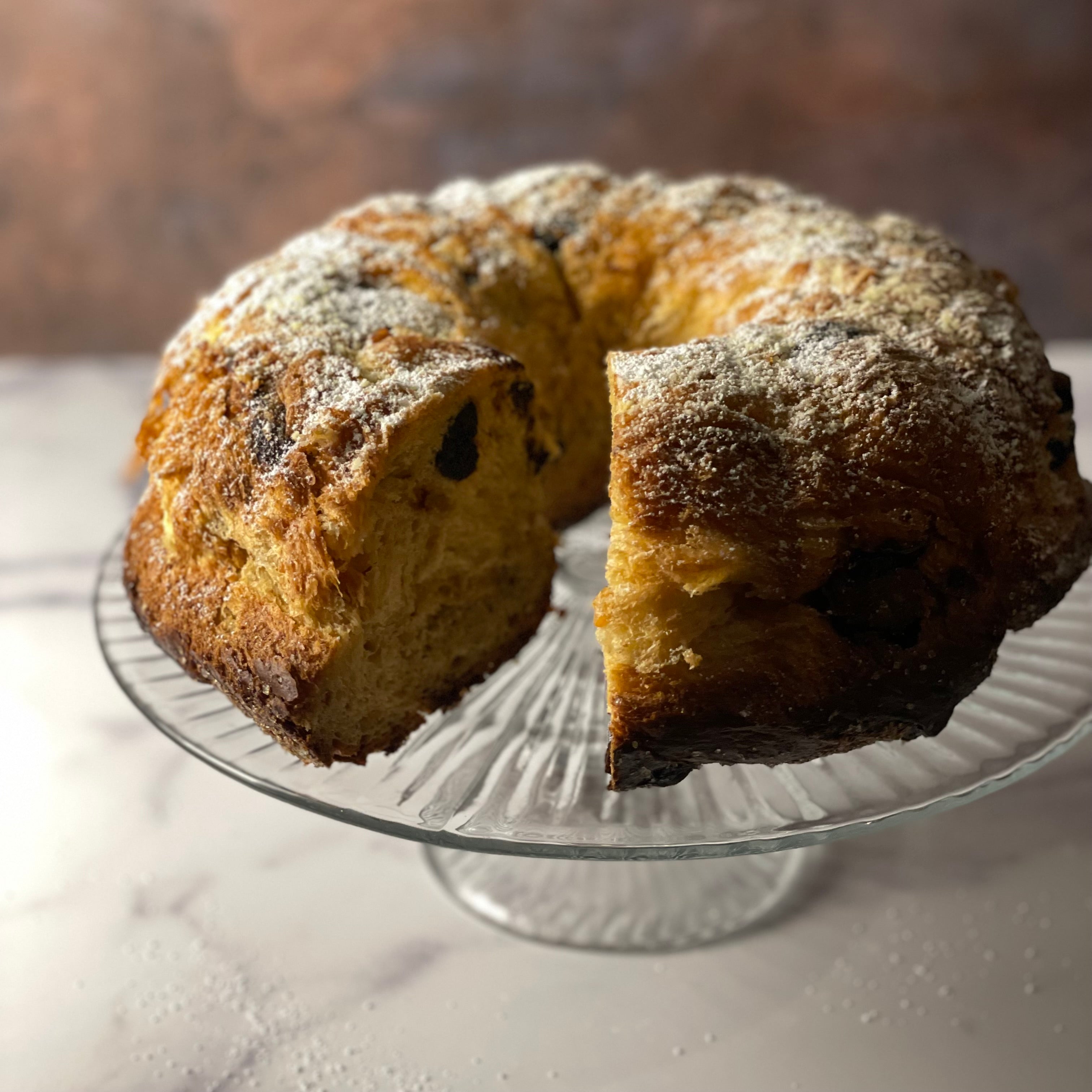
Donald mentioned that he'd heard that Tartine had an olive oil brioche, so I called upon our baker-friend, Dan Flynn, once again and asked him about it. He had, in fact, made the Tartine Olive Oil Brioche and shared the recipe--somewhat daunting for me to read (as I'm not a professional baker). It was developed to bake quite a large amount with a yield of 4 to 6 loaves. I was enthused to see that the recipe's introduction stated, "The assertiveness of the oil depends on the variety you choose. For the version we make at Tartine, we like to taste the olive oil in the finished bread, so we use a strong-flavored extra-virgin oil." We used Picual (our medium intensity oil) for the cake you see photographed, and next week will be making another brioche to share with you using Olio Novello.
Between's Fabienne's reference to very ripe oils, and Tartine's reference to very strong oils (such as our robust Olio Novello) it seems the most any extra olive oil will work. I think that a lemon agrumato would be very interesting to try one day, too.
In the end it was Donald's own experience as a professional baker in his own right along with some inspiration from King Arthur Flour's traditional (i.e. butter) brioche recipe that formulated this recipe. We love it and hope you enjoy reading about it or perhaps even making it this winter. We'll continue to refine our thoughts about ingredients and technique and will be publishing additional notes in future.


With the inclusion of fruit the result is a bread very much more reminiscent of panettone than brioche. For now, this is our Olive Oil Christmas Brioche contribution to your weekend.
Olive Oil Brioche with Candied Fruit
Much like traditional panettone, this olive oil brioche is an egg rich yeasted dough, quite wet to handle. This recipe needs to be made in a stand mixer; we don't recommend trying this by hand. This recipe will require an 8 cup loaf pan, cake pan, or ring mold.
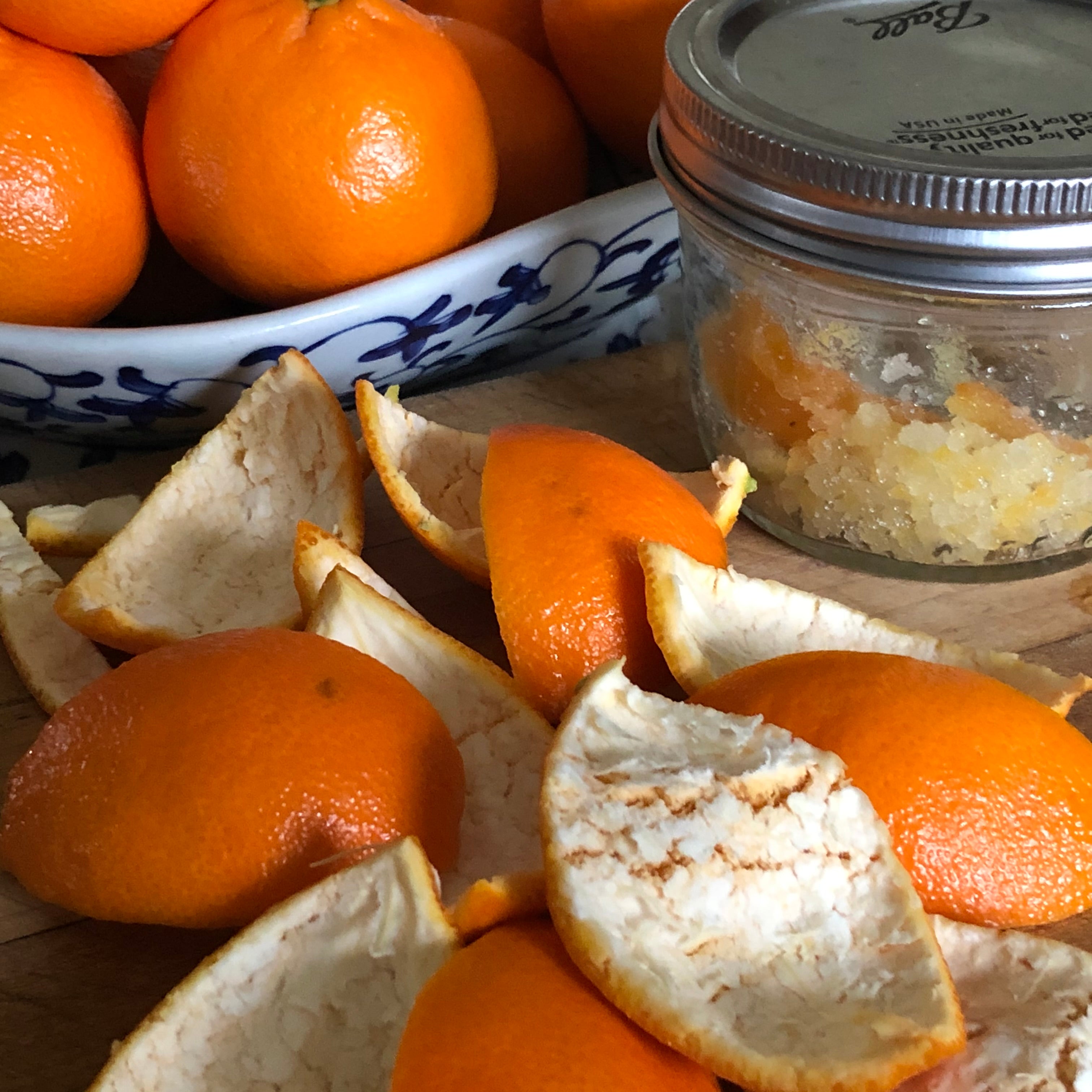
It seems that orange is a common element in both brioche and panettone, and Donald and I believe that one thing that really makes this holiday bread special is the inclusion of candied orange peel. If you'd like to make your own, you can find technique notes on how to candy and enjoy citrus peel here.
Ingredients
- 2 ¾ cup (330g) unbleached all purpose flour
- ¼ (28g) cup nonfat dry milk
- 3 Tbsp (35g) granulated sugar
- 1 tsp (8g) sea salt
- 1 packet instant yeast
- 3 large eggs (cold)
- ¼ cup (57g) water (cool)
- 1 Tbsp vanilla extract
- ½ cup (106g) Lucero Extra Virgin Olive Oil
- 12 oz candied and/or dried fruit cut into ½ inch pieces. I used equal parts pitted prunes, pitted dried cherries, and homemade candied orange peel
Directions
Weigh or measure flour into the bowl of a stand mixer
In a stand mixer fitted with a dough hook mix together all ingredients except the EVOO and fruit. This should take about 10 minutes on medium speed. You may need to add a few more tablespoons of cool water to the dough in case it does not want to come together.
Once the dough starts to come away from the bowls and has developed strength and elasticity start adding the EVOO about 2 tablespoons at time. Wait until you see the dough has absorbed the oil before adding more. Continue kneading the dough for another 5 to 10 minutes until it is very stretchy, smooth, and shiny.
On a low speed add the dry and/or candied fruit now. Let it mix in the dough until very well incorporated, about another 3 to 5 minutes.
Form the dough into a ball (it will be very soft and sticky), place it in an oiled bowl, cover the bowl with oiled plastic wrap. Let rise for 1 hour at room temperature. Punch down and refrigerate the dough for several hours or overnight. This will slow the fermentation and cold dough is easier to handle and shape.
Place the dough into the buttered pan and cover lightly with oiled plastic wrap and let rise at room temperature for 2 ½ to 3 hours until it’s doubled and looks very puffy.
Preheat oven to 400ºF. Place the pan into the oven and bake for 10 minutes, then lower the heat to 350ºF and bake for 30 to 35 minutes more, tenting with foil after 15 minutes to keep from over-browning. Bake until the internal temperature reaches 190ºF in the center. Remove from the oven, let stand for 5 minutes, then turn out onto a rack to cool.