Cooked Egg EVOO Mayonnaise
This is a guest post from Donald, co-written by Liz
Olive Oil for Traditional Raw Egg Mayonnaise
I have made basic mayonnaise many times since first learning to cook in the '80s. In those days I used the traditional method, the one you've seen Julia Child demonstrate by beating raw egg yolks with a wire whisk while slowing adding a neutral oil. It’s easy once you get the hang of it, and it's a quick sauce to make whether you choose to use it by itself or as a base for other sauces.
When I was working in catering kitchens (a long time ago) everyone in the kitchen crew thought that using olive oil for making mayonnaise didn’t work well because the flavor was "too strong". Even today many recipes for mayonnaise recommend using a “neutral oil”. Thinking back to that time, it is clear to me now that we didn’t have good olive oil, and that perhaps cookbook authors, journalists, and bloggers who specifically ask you to choose a neutral oil rather than olive oil may be reacting to the aroma and flavor of fermented or rancid olive oil. I wonder if their recommendations would be the same if they had authentic fresh extra virgin olive oil on hand.
Now that I use high quality EVOO in the kitchen everyday I thought I’d experiment with making mayonnaise using our oils.
The results were excellent! The flavor of the oil does indeed come through very well in a pleasant mildly fruity way, and makes for a healthier sauce versus substituting a "neutral" oil, too. As Liz likes to tell folks, "neutral" oil is code for "refined" oil, and refined oil is an odorless flavorless fat with the same 120 calories per tablespoon and an EVOO but without EVOO's nutritional benefits.
Cooked Egg Mayonnaise
In addition to the question about which oil to use, many people will not make this sauce because of the requirement that raw egg be used. Recently, social media has made the idea of cooked egg mayos popular. This is not a new technique; chefs long ago have known about this option, however, I have never tried it, so the technique is a new one for me.
There is a technical difference when making mayonnaise with cooked egg. It would be very difficult to whisk in oil into cooked egg by hand using a wire whisk, so you need to either use a food processor, a mini processor like a Bullet blender, or an immersion blender. There is a difference in techniques between these three tools so I will give instructions for each in the recipes that follow.
Flavored Mayonnaise
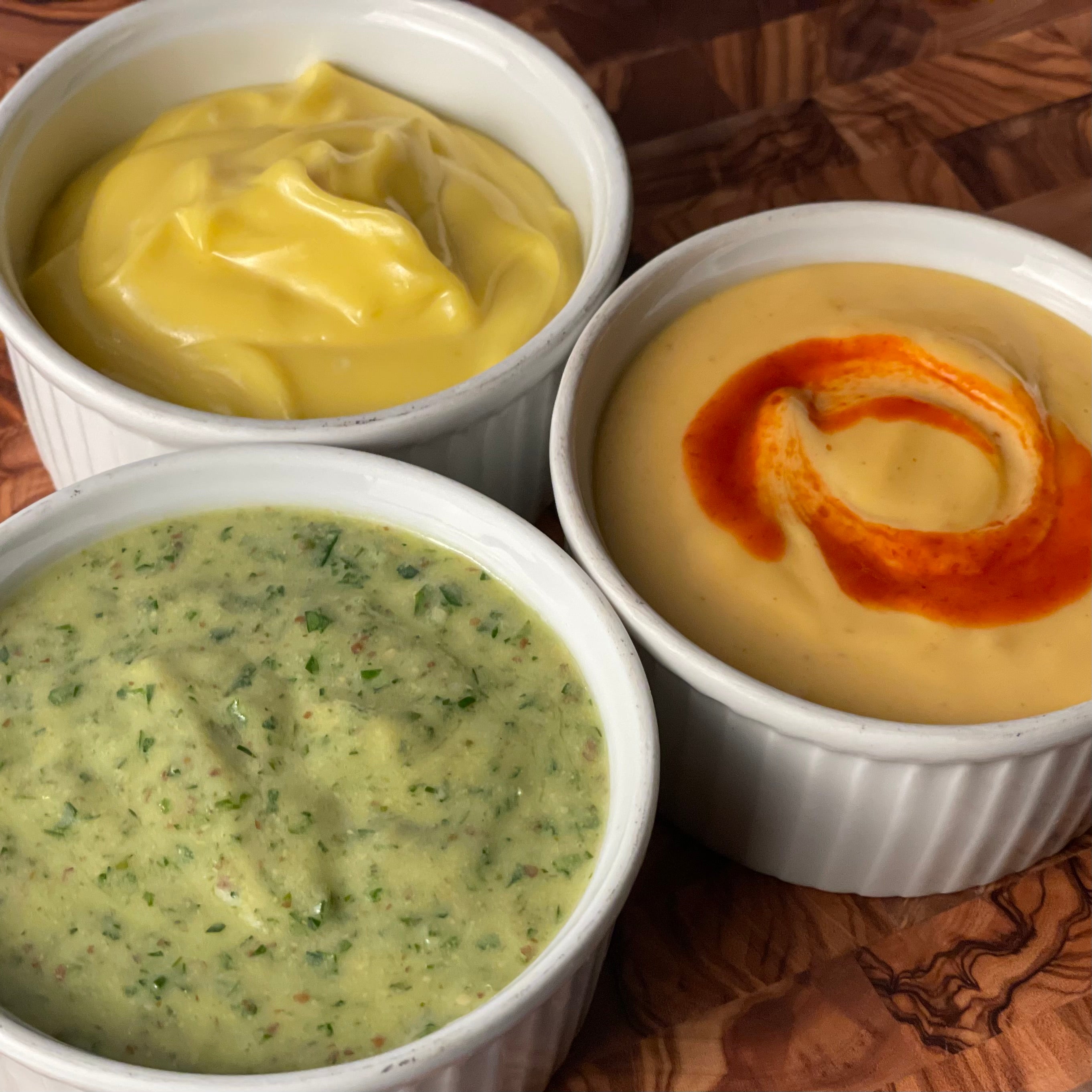
Once you become comfortable making mayonnaise at home, whipping up a sauce is quick and very simple, especially using this cooked egg method. In preparing this post we made a traditional "plain" mayonnaise, an herbed mayonnaise, and a sriracha version.


Cooked Egg EVOO Mayonnaise
This sauce is quick and easy, and we use the phrase "quick and easy" deliberately. The most time consuming aspect of making this sauce is boiling an egg.
Ingredients
- 1 large egg
- 1 cup Lucero Extra Virgin Olive Oil
- 1 Tbsp fresh lemon juice
- 1 tsp Dijon mustard
- sea salt to taste
Directions
Bring a pot of water to a boil and add the egg. Lower the heat to medium and cook for 9 minutes. An internal temperature of 160° F will insure the egg is safe. I tested three different cook times and found that cooking one egg in simmering water for exactly nine minutes gave me this internal temp. Immerse the cooked egg in ice water to stop the cooking and keep it in the water until cool.
Food Processor Method
Add the cooked and shelled egg, lemon juice and mustard to a food processor with a metal blade. Pulse to combine.
Slowly pour the olive oil into the mixture through the feed tube of the processor. You should have a thick, smooth mayonnaise now.
If the sauce is grainy and not smooth refer to the instructions below for broken emulsions.
Immersion Blender Method
Put all the ingredients, including the olive oil, into the tall beaker provided by the immersion blender company or use any similar tall narrow beaker.
This method works best when the oil is well above the egg mixture, and I found that a double batch will work best if using this tool.Place the immersion blender with a metal blade attachment all the way down to the bottom of the beaker with the power off. The oil should be at least 3 or 4 inches above the blender blade.
Press the power button and slowly pull up while making sure the mixture is emulsifying from the bottom up as you pull up. Once you reach the top and all the mixture has emulsified you are done. If the sauce breaks refer to the instructions below.
Herbed Mayonnaise Variation
Add 1/2 cup of chopped parsley before blending. Basil or chervil could work too.
Sriracha Mayonnaise Variation
Add 1 Tablespoon of Sriracha, or more, if you’d like the sauce to be hotter.