Let the Tomato Choose the Olive Oil
There is no single best olive oil for caprese. Sweet tomatoes, tart tomatoes, delicate mozzarella, creamy burrata, fresh basil—even a splash of balsamic vinegar—change the equation. Start with the tomato, then choose the oil that lets it become more itself.
Insalata caprese originale

I first came to know insalata caprese in Italy, most memorably along Lake Como: ripe tomato, fresh mozzarella, basil, extra virgin olive oil, and salt. No burrata. No balsamic vinegar. The pleasure was in the quality of a very few ingredients and the balance among them.
If you visited Campania 100 years ago crossing from Sorrento to the Isle of Capri, you might have been treated to a tomato salad that looked similar to the one we photographed above—simple red tomato slices with matching white rounds of local mozzarella.
One of the several apocryphal stories about the origin of insalata caprese is that it was developed as part of a tourist promotion by the resorts there. Capri had been a resort destination since Roman times, so tourist promotion was deeply part of the culture. Italy had only been unified for a few decades by that time, however, Il Tricolore, the national flag, the Bandiera d'Italia with its equal bands of green, white, and red, moved steadily from a regional banner into a symbol of national unity between 1797 and the actual creation of an Italian nation state in 1861. Adding the basil to this salad as a flourish was not only delicious, it also had the effect of honoring the flag and representing the new concept of Italian national pride.
Heirloom Tomatoes Reach New Heights

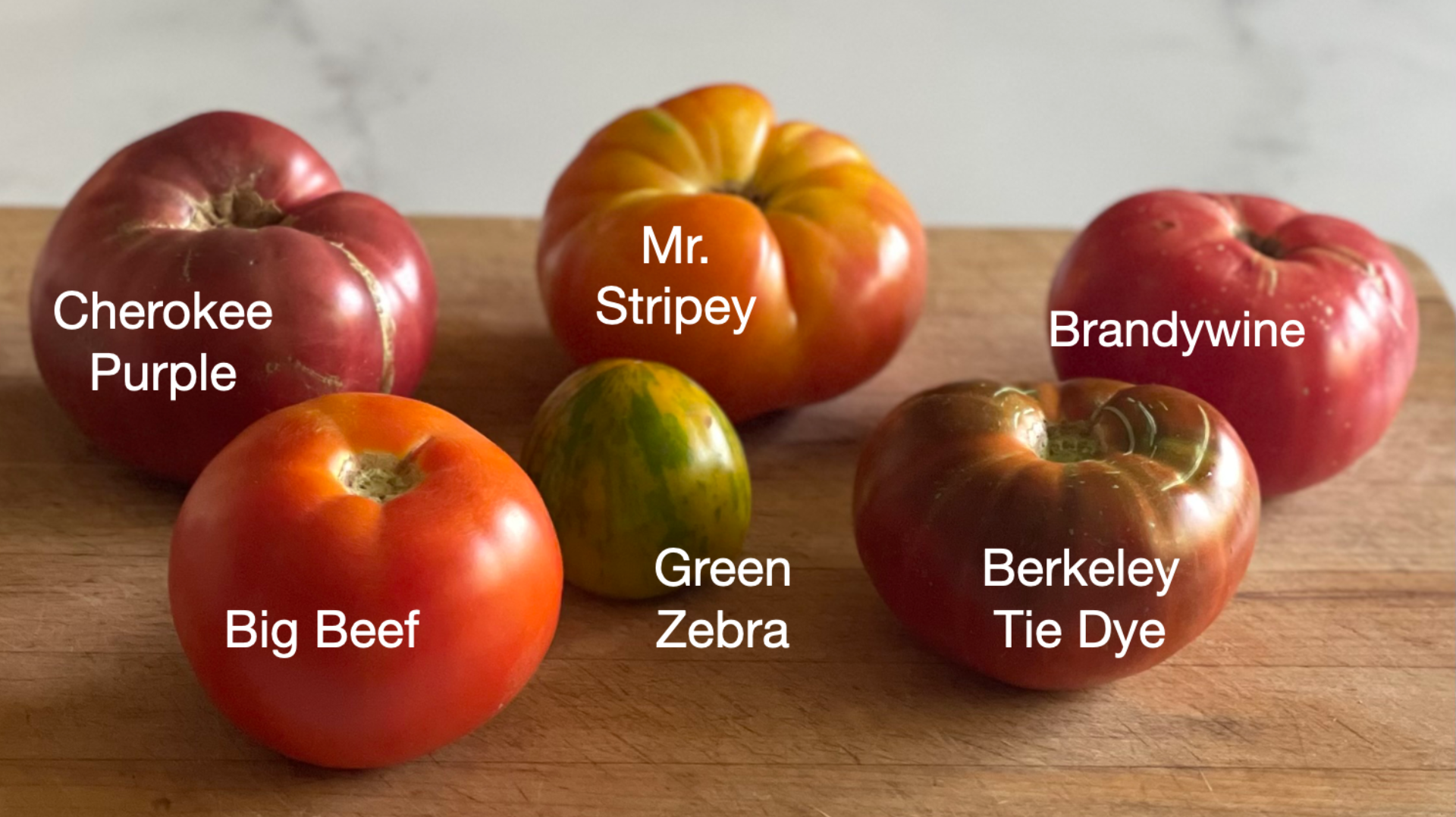
As more of us garden, shop at farmers' markets, and seek novel sensations, the original caprese salad has faded from view and the salad shown above (made using the six tomatoes labeled at the top of the page) has risen in prominence. This presentation is the antithesis of the staid, almost sterile, rounds of the original version.
This utterly 21st century salad is so well known we no longer even say "insalata" in front of "caprese". Not unlike when the best mortadella in Italy came from Bologna and became so famous it is no longer called mortadella...it is now known solely by its place name of Bologna (baloney). Today a "salad in the style of Capri" is just "caprese".
Here the various shapes, colors, and textures of tomato are arrayed in a fanciful layered style, the traditional mozzarella is frequently replaced by the creamier pugliese variant called burrata from 150 miles away, and the basil torn and tossed with a casual abandon. I love how olive oil settles in the cheese's rough places and mixes readily with the creamy inside.
Gimme Somma that Balsamic Vinegar

Balsamic vinegar is not automatically part of a meal when traveling throughout Italy because aceto balsamico is not Italian—it's modenese—yet Americans love balsamic vinegar on salad and expect it, nay, require it.
Although using balsamic vinegar is not traditional in Capri, it is indeed quite tasty. I enjoyed taking these photos very much and now, a day later, can conjure the aromas, flavors, and textures of these simple summer salads quite readily.
What a marvelous symbol of Italian unity insalata caprese has evolved into; from a nod to colors, to the notion that a modern version often has a pugliese element with burrata and even a modenese aceto balsamico component.
Let the Tomato Lead
How do you describe the flavor and aroma of a tomato—or an apple, grape, or olive for that matter? I suppose we all have a sort of default range of attributes so we can readily identify "tomato" as distinct from "garlic" or "oranges", yet within the world of tomatoes (and olives) there can be a wide range of flavors and aromas.
I began with the assumption that one olive variety might prove especially well suited to caprese. The tomatoes quickly dissuaded me from that notion. For food pairing it's much more exciting to try different approaches and let the ingredients lead you. Some tomatoes will do well to layer similar flavors, yet others will improve with the power of contrast and the unexpected pleasure that two flavors together can and do create a third flavor.
I did not taste all tomatoes with all oil combinations tonight, however, I did cut into one of the "Big Beef" tomatoes as it is a likely variety you'll find in your market, and I enjoyed it with both mild and robust olive oils. The mild oil, in this instance, our Lucero Ascolano Extra Virgin Olive Oil, delivered lovely layered tomato flavors as expected—smooth and truly complementary due to the stone fruit aroma of this fruity oil. The robust oil, the Lucero Taggiasca Extra Virgin Olive Oil, danced on my tongue. The combination of this particular tomato's flavors with the bitterness of the oil did not make the tomato more bitter—it made its aroma more floral and the flavor rather spicy and exciting. Five Stars!
There is another possibility I did not include in my original tasting: our Basil Olive Oil, made by co-milling fresh Genovese basil with the olives. It poses a different question altogether. What happens when the basil is carried throughout the salad by the olive oil rather than encountered only where a leaf happens to fall? I would not banish the fresh basil, but I would use it with a lighter hand and let the oil contribute some of its perfume.
Taste, Dear Hearts, Taste
A good olive oil truly does transform food, and who's to say that there is a single "right" olive oil for your tomato salad? I am motivated to keep tasting this summer and will put more time into thoughtfully trying my different oils with different types of tomatoes.
De gustibus non est disputandum—in matters of taste, there can be no disputes.
Enjoy!
All tomatoes used in these photos were sourced from a local farming family who run Julia's Fruit Stand just north of Corning.