Article: An American Olive Story
An American Olive Story
Each year we meet the loveliest olive people, and often they share with me their history with olives growing up or their everyday experience of harvesting, preparing, and enjoying olives at home. I recently received a note from our customer, John Sutter, who sent me one of his memories from a few years ago. I've republished this piece with his permission.
An Olive Story, by John Sutter
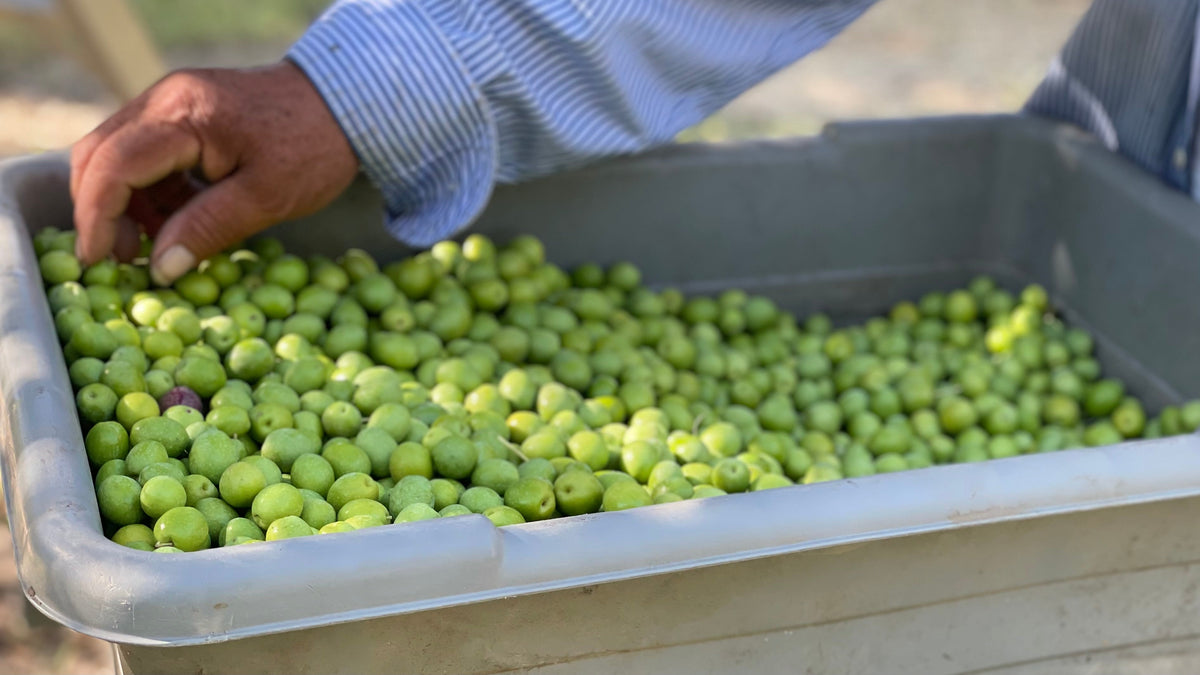
I ordered a box of olives from a farm in Corning, California called American Olive Farmer. A twenty-pound box of large, grade A green olives, “perfect for home curing” was heading to my door via the U.S. Postal Service. When the box appeared on the front porch, I was giddy with expectation. I gave the box a shake and felt the thumping and bumping of the olives inside.
Although I watched my grandmother cure olives many times, the young live in the moment and don’t see the details such that they can repeat the process. And so we find ourselves saying things like, “Oh yes, my grandmother used to make all her own cheeses, but all be damned if I know a curd from a whey.” So we call the old folks up and ask them or, if they have passed on, we search that great repository of how to do stuff, YouTube. I searched how to cure olives at home. There was a wide spectrum of practitioners; straight laced housewives with gleaming white aprons. Wrinkled brown Italian women with old world crocks and wooden utensils and an old guy from the South who used a reclaimed plastic detergent bucket. In the end, I went with the old guy because I identified with him and because he seemed a little more slap-dash than the others.
Olive season happened in October at my grandmother’s house. She cured her own olives in large ceramic crocks on the back porch. I have one of these crocks and they are monsters, 15 gallons and a real gut buster to move. When they are filled with water they weigh over 125 pounds. The crocks were moved to the back porch and the leaves sprayed out with the hose. A trip to Corning was planned, the closest real olive groves to Shingletown. I am unclear where exactly my grandparents bought the olives but they were small and there were many brown olives in the mix.
The curing process involved soaking the olives in lye at first. We were told not to stick our hand in the crocks or the “acid” would burn our skin. After about a day and a half, the lye water was drained off down onto the dirt. This is why the olives had to be cured outside so the acid and then the water could be easily drained off. Once the olives were soaked in lye, they had to be soaked again in fresh water to get the soapy tasting lye out of the olives. This took multiple rinses. The olives were sampled between times. Sometimes we grandkids were volunteered to test the olives. A child’s palate might be unrefined but it is sensitive and accurate. “Yuck!” we’d say and spit the olive off the back steps if it tasted like soap.
Finally, the olives were clean of the taste of lye and they would get brined. This was the final phase before the eating could begin. At long last, the olives were ready and they were amazing. They had a nutty, buttery flavor but so mild. I don’t know if Nanny ever intended to can the olives. In any case, they never lasted long enough for canning, we fished them out of the salty water by the handful and spit the seeds in the powdery red dust as we walked barefoot to the lake. We spit the seeds in the ditch as we sat on the rock wall, aiming at a bull frog who lived there. We spit pits at the blue-belly lizards who lived on the patio furiously doing their pushups and we spit the seeds out the back window of the old Jeep Wagoneer on the way to Shingletown Store.
Toward the end of October we were literally scraping the bottom of the barrel for olives. The ones we could find were dark and the loose flesh fell off easily. And then, against all expectation, the last olive was lifted out of the crock. Olive season was over. The tea colored water was poured out and the crock moved under the eaves of the house and turned upside down, sheltering amongst the oak leaves until next season. ___________________________________
John Sutter is a retired certified Forest School teacher. Forest School is a long-term, child-centered educational approach that takes place outdoors in a natural or woodland setting. He also teaches cooking classes, including how to brine olives at home. John is teaching olive brining this weekend at Sea Goat Farmstand in McKinleyville, California, and there are still spaces left to join him. Sign up at Sea Goat Workshop Schedule