Angie Makes Home Cured Green Olives
Home Cured Olives
I've been in the specialty food business for over 40 years, and it is fascinating to me how few people were interested in canning or "putting food by" back in the 1980s versus today in the 2020s. I suppose the same can be said about interest in backyard chickens and kitchen gardens. What was once "ethnic" or "niche" seems evermore mainstream, and I'm glad for that. The notion of self reliance has always resonated with me.
There are two obstacles most Americans face when looking to cure their own olives at home: 1) olives are a low acid food, so strict food safety protocols must be followed and, 2) unless you live in an olive growing region, it's not easy to get fresh olives!
I'm here to help you on both fronts as I will be writing about food safety between now and when the new crop comes in and, as long as you're in one of the 48 US states, I can ship fresh olives directly to you from local orchards here in my hometown of Corning, California. Corning has been known for the past 100 years as "Olive City" due to our region's olive acreage and the local olive cannery, the second largest ripe olive cannery in the world.
I'll also be sharing some first person accounts from both first time olive preparers and folks who learned at their grandma's knee. This first story about my friend and colleague, Angie. Do you have a home-cured olive story? If so, I'd love to hear from you! - Liz
Angie Makes Home Cured Green Olives
I first met Angie when looking for a food photographer for a client in 2012, and four years later hired her and her food stylist team to set up and capture all of the imagery for our annual catalogs at Lucero Olive Oil. If you have any of the old catalogs from 2016, 2017, and 2018, that's her work! She, her film maker husband, and our designer travelled to Corning November 2016 and captured many of the original orchard photos and production we used at the time, and I still rely on some of those original photos today. She spent several days here, including two days in the Williams 160 orchard capturing many lovely photos of farm workers, and the photo you see on our home page is Angie "wearing" a harvest bucket full of Picual olives.
An avid gardener and home cook as well as a talented professional photographer, Angie was enchanted by the home cured olives that my partner, Bob freely shared with customers who visited, and she asked if she could try brining at home. We shipped olives to her twice due to a processing error, and Bob sent along his recipe.
FOOD SAFETY LESSON: Never use lye in a reactive pan!
The words that follow this introduction and all images in this post are Angie's. You can find the original post along with other of her recipes and photographs on her WordPress blog Stray Cats and Blackberries.
Bob's Home-Cured Green Olives


Angie Makes Home Cured Green Olives
My Husband and I were working with Liz Tagami in Corning photographing Lucero Olive Oil’s orchards fall 2016. Bob Crane, Liz’s partner, makes these incredible brined olives and he shared some with me. When I asked if I could pick and take some olives home to try myself neither one of us knew he would have to ship them to me twice. Who knew that when you soak the olives in lye you can’t use a metal pot!
Ingredients
Debittering the Olives
- 3 gallon crock filled with water
- 8 oz lye
- ¾ cup salt
- 3 gallons of fresh green olives. Angie used a smaller olive, similar is size to our Manzanillo
- if you prefer large olives, Bob grows Sevillano at home.
Brine
- 2 qt water
- ¼ cup + 3 Tbsp Salt
Flavoring the olives (measurements per jar)
- 2 cloves of garlic
- 2 dried chiles
- ¼ tsp basil
- ⅛ tsp garlic powder
- ⅛ tsp cayenne
Directions
Debittering
Add lye and salt to water and stir to dissolve. Be careful not to get any on your skin as it can burn
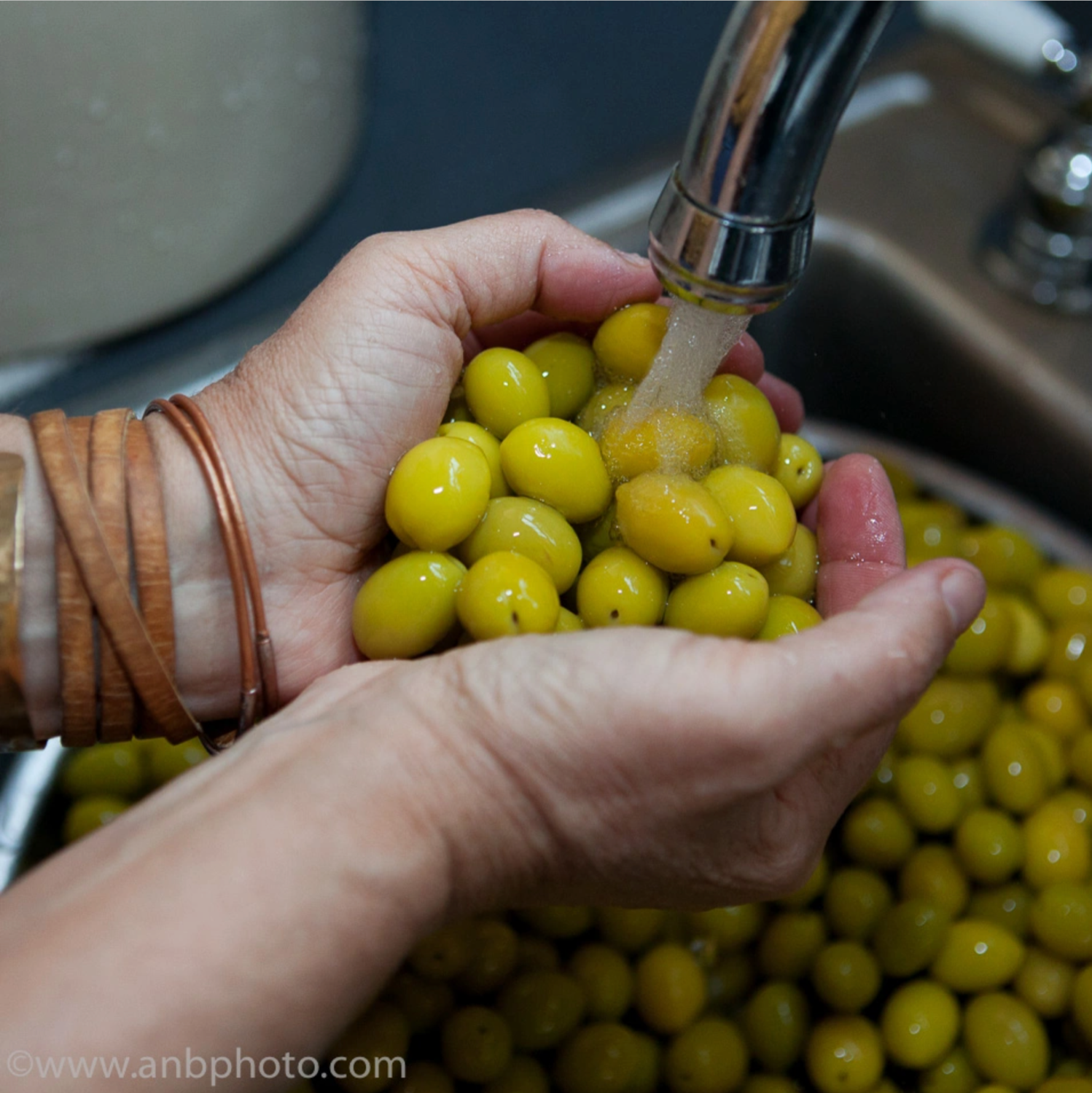
Add the raw olives. Keep olives under water by placing a small towel on top of them in the water for 48 hours. The water should turn very dark, almost black.
Pour off lye solution. Cover with fresh plain water 3 times a day for 4 days or until the water is clear and the soapy taste is gone.
Drain and discard any bruised and soft olives.
Flavoring / Putting Up
Pack each jar with the herbs and spices and pack the olives in
Prepare the brine and fill each jar, covering the olives, and put on the lids.
Keep olives in the refrigerator