


Olive Trees for Home Orchards
Olive Trees for Planting: Sets of 4 or 9
For customers ready to plant, these are our working orchard trees.
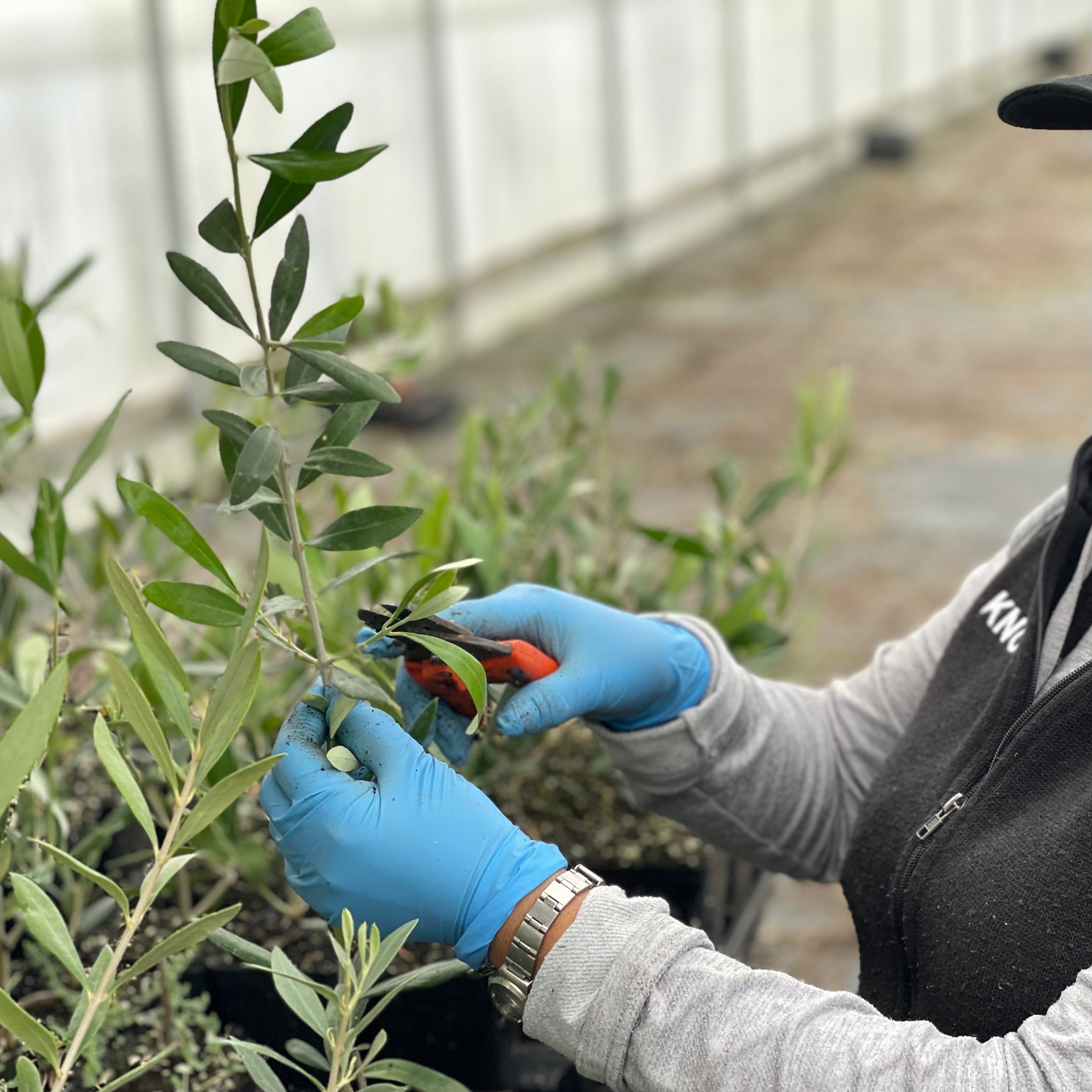
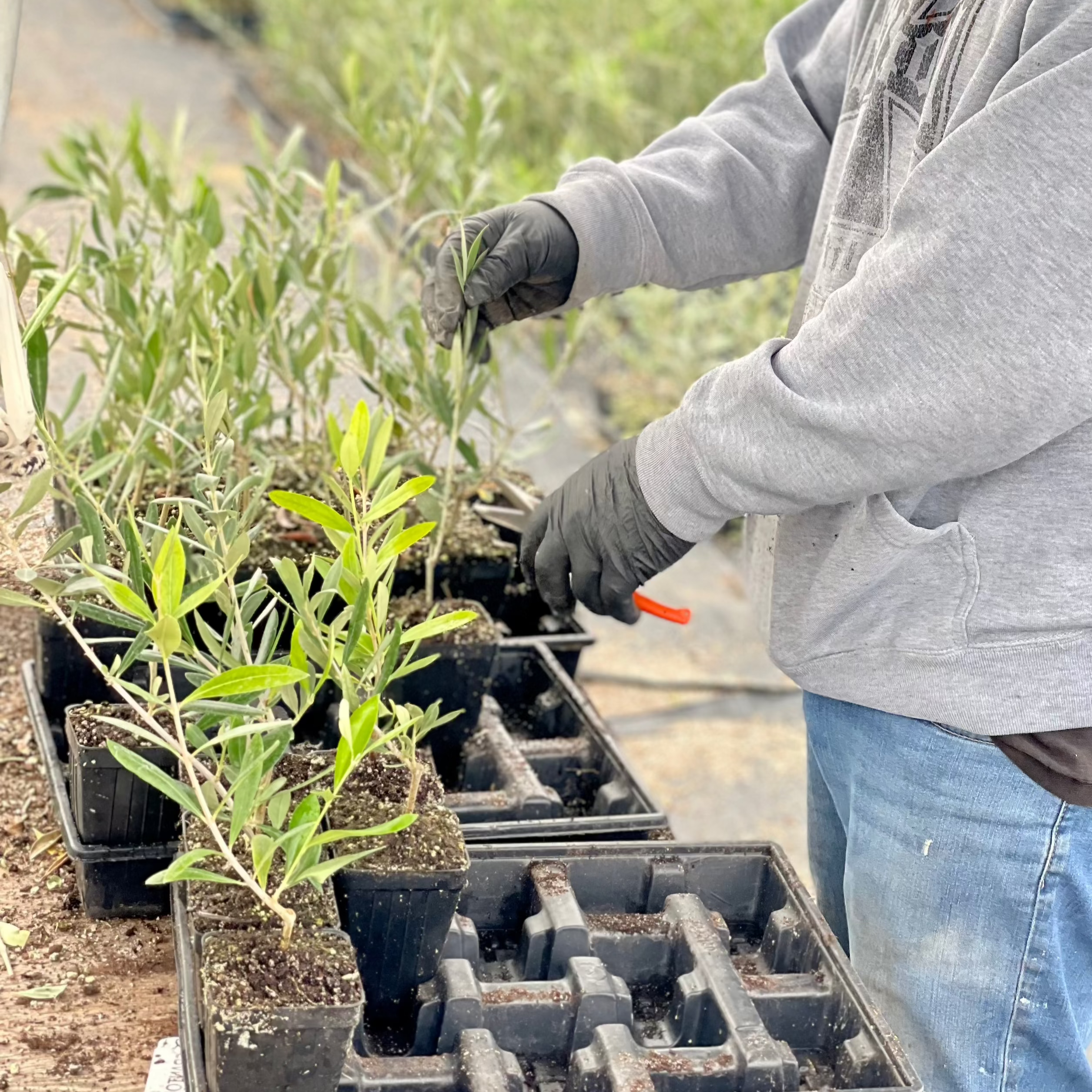
These olive trees are offered without adornment for customers who intend to plant—whether establishing a small home orchard, adding structure to a landscape, or simply growing olives over time. They are the same nursery stock we use for productive commercial orchard plantings.
Climate Zone Considerations for Olive Trees
Olive trees are best suited to USDA Zones 9–11, where they grow reliably and produce consistently. In Zone 8, success is possible with cold-hardy varieties, careful siting, and an understanding that occasional cold events may impact growth or yield.
Established plantings exist even in colder regions under carefully managed conditions, but these are exceptions rather than the rule. In every case, success comes down to matching the tree to your specific microclimate.
If your location falls outside this range, olive trees can also be grown in containers or in a greenhouse environment. In these cases, make sure the tree receives sufficient sunlight, has well-draining soil, and is allowed to dry slightly between waterings.
If you are gardening outside of USDA Zones 9-11, I'm always happy to discuss your specific conditions. Please call me at 530-727-2004 so we can plan for success.
To provide the best possible value, trees are nursery-selected. This allows us to offer healthy, well-matched trees at a meaningful savings while maintaining flexibility for the grower. That said, if you have a specific goal—oil production, table olives, or non-fruiting ornamental use—you are welcome to note your preference at checkout or contact me directly and we will do our best to tailor the tree selection to meet your preferences.
Where required, appropriate pollenizer varieties will be included to support fruit set.
Choosing the Right Olive Trees
Olive varieties differ in both growth habit and end use. In practice, this is where most customers pause.
- Table olive varieties produce larger, fleshier fruit
- Oil olive varieties typically yield higher oil content
- Non-fruiting olive selections (such as Wilsonii) are suitable for regulated landscapes and for customers sensitive to pollen
If your project has constraints—HOA restrictions, space limitations, or specific production goals—please let me know. I am always happy to help you make a considered selection.
Climate and Growing Conditions
Olive trees are well suited to Mediterranean climates and perform best in full sun with excellent drainage.
- Full sun is required for healthy growth
- Excellent drainage is essential
- In colder regions, trees can be grown in containers or protected environments to extend their range
- Site selection is one of the most important factors in long-term success
You may consult the USDA Plant Hardiness Zone Map to confirm your zone.
Ordering and Shipping Live Olive Trees
Trees ship directly from our nursery partner in Northern California via UPS Ground. Trees are packed with care to protect both the root system and structure during transit.
- Orders are packed weekly based on nursery availability
- Live trees ship separately from other products
- You will receive separate tracking notifications if your order includes additional items
The 4-pack option is ideal for small or trial plantings. The 9-pack option offers a better per-tree value and is well suited for establishing a small orchard at home. Planning an even larger project? I am happy to assist with variety selection and volume orders.
Details
- Available as Set of 4 or Set of 9
- Northern California grown nursery stock
- Approx. 12–18" tall single-trunk trees (some variation expected)
- 3" x 3" x 4" pots with certified, pest-free soil mix
- Carefully packed for safe transit
No gift packaging, tags, or decorative elements included.
What to Expect in the First Growing Season
Olive trees establish gradually. Early development is often subtle, as the tree prioritizes root establishment before pushing visible top growth. In the first 6–12 months, most activity occurs below the soil.
- Top growth may appear modest in the first season
- With proper siting and care, trees typically push more vigorous growth in their second season
- In warm climates, early flowering can occur sooner, though consistent fruiting follows once trees are established
The final images show four trees at unpacking in October and the same trees approximately six months later in April. This progression illustrates that even young trees may arrive with buds or blossoms under favorable conditions.
Shipping Restrictions
We are unable to ship live trees to AK, HI, U.S. territories, PO boxes, or APO/FPO/DPO addresses.
Choose options

Personalized Care
By the owner, always

Secure payments
Using standard industry encryption

Live Trees & Fresh Olives
Ship to you via UPS Ground
Oil & Vinegar
Ship to you via ShipBob Express